If you make a purchase using our provided links, we may receive a commission. Learn more here.
Were you just about to enjoy a freshly brewed cup of coffee only to find your Keurig machine has stopped working?
This can be a real nuisance when all you want is a quick morning coffee.
Follow these troubleshooting tips, you can solve your Keurig problems and get it back brewing in no time.
Is Your Keurig Coffee Machine Broken Again? (Fix It With These Tips!)
Keurig coffee makers are a great way to up your coffee game, but have you ever wondered, 'why is my Keurig not working?'
It's a common question as they're responsible for a large portion of coffee maker sales.[1]
Keurig coffee makers have a lot of complicated parts, but most of the time, you can fix it yourself.
Let's look at some easy DIY fixes for some of the most common issues when your Keurig won't brew.
These have been gathered from our own experience, and from other Keurig owners in the Keurig community - so they all the common problems.
These will help if your coffee maker stops brewing after a few seconds or suffers any other common Keurig problems.
1. Are All The Parts Assembled Correctly?
If you’re wondering, ‘how do I get my Keurig to work?’, one of the most straightforward fixes for a Keurig machine is correctly assembling all the parts.
Every part has a specific purpose. If they're not in the right place or misassembled, then your Keurig won't brew coffee like it should.
To troubleshoot each part, you should unplug your coffee machine and look at every part individually.
For example, a common problem for many people is that the Keurig water reservoir isn't installed correctly. It should have a magnet holding it in place.
If the reservoir is in the right place, then the problem will be in another part.
Misassembled parts can happen on any Keurig machine and it's one of the most common Keurig problems, so it’s crucial to check them when troubleshooting.
Examples include Keurig Duo troubleshooting and Keurig 2.0 troubleshooting.
2. Remove Those Trapped Coffee Grounds!
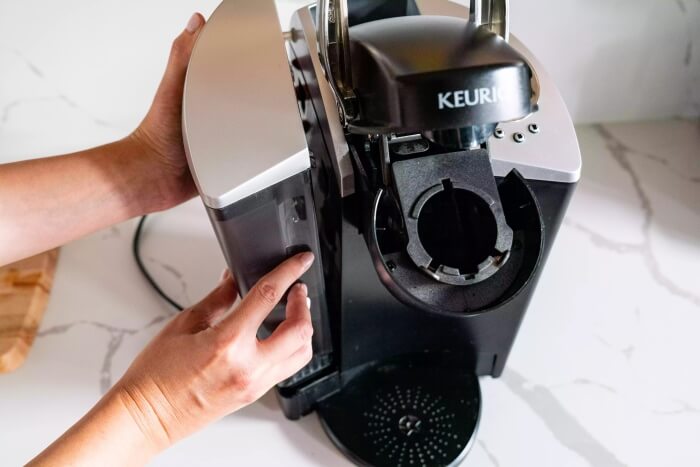
The coffee grounds in Keurig problem is very common and can ruin the quality of the coffee Keurig brews. This can even mean the Keurig won't brew at all.
Keurig Mini troubleshooting and Keurig K155 troubleshooting, along with troubleshooting for other Keurig machines, includes dealing with trapped coffee grounds.
You can remove trapped coffee grounds by using a technique known as “burping” or “spanking.”
You can use this technique to remove any stubborn coffee grounds or debris inside your Keurig machine.
Firstly, you will need to remove the coffee pot water reservoir and the drip tray. Then bring the whole device (unplugged) over to a sink or onto a plate to contain the mess.
Turn the machine upside down and gently tap it a few times.
Turning the machine upside down should remove residual water and any leftover coffee grounds trapped in your Keurig, especially within the internal mechanism and the K-cup holder.
This should fix the issue and let the Keurig brew amazing coffee.
3. Unclog The Needle Often
The needle of a Keurig needs to be maintained often. This is true when troubleshooting all Keurig models, including Keurig Duo troubleshooting and Keurig Elite troubleshooting.
The needle within the brew head must be kept clean because it punctures the lids of the K-cup capsules inserted into your Keurig machine, and without it your Keurig won't brew delicious coffee.
You can do this manually by sticking a paper clip or pin in the tube where the Keurig needle punctures the K-cup.
Depending on the Keurig model, the needle can be a tricky part to clean. To clean the needle thoroughly, you will also need to clean all of the internal filters of your machine.
You can use a potent cleaning mix of hot water and vinegar to clean the internal filters thoroughly. Then you can wash them with soap and hot water to fully remove the white vinegar taste.
Finally, you should put water through the filters for several cycles to eliminate unwanted flavors.
4. Make Sure You Check The Water Reservoir For Grime
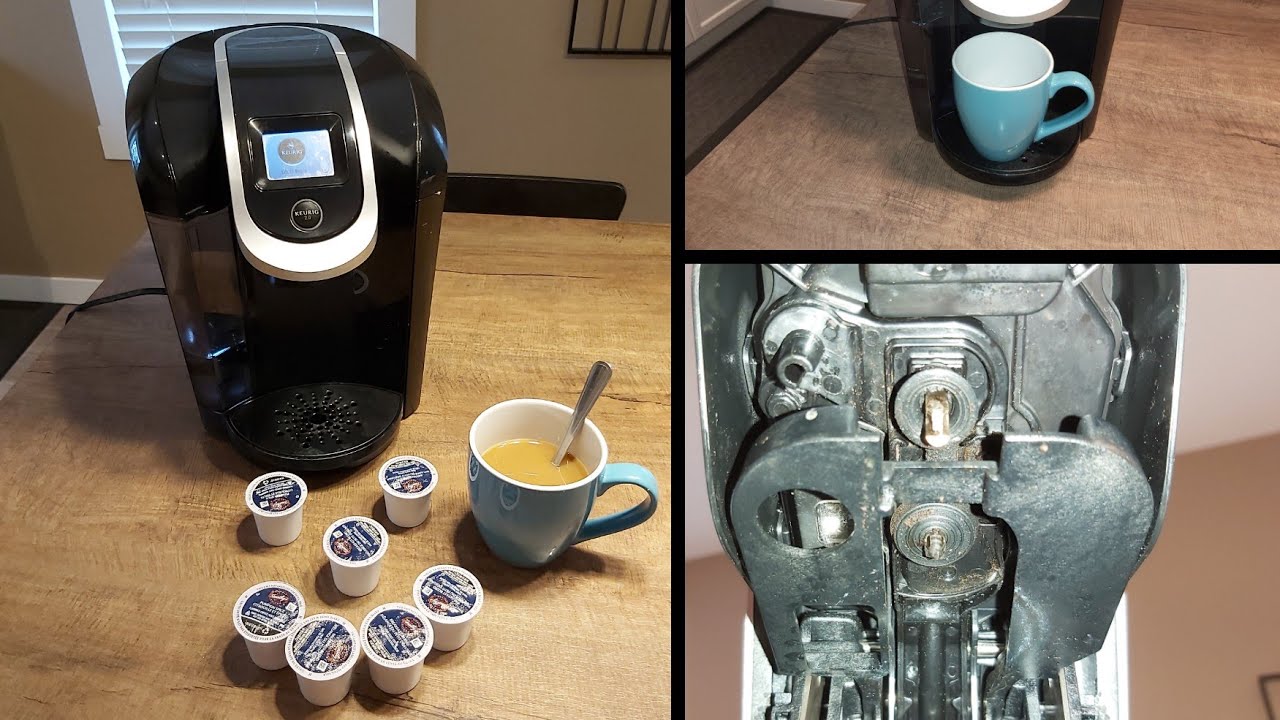
A clogged water reservoir is due to a build-up of debris or used coffee grounds in the cold water reservoir. This can mean that your Keurig won't brew, or that your brew cycle is much slower.
This build-up results from constant usage and not enough water reservoir cleaning. This won't be relevant if you’re doing Keurig K Mini troubleshooting as it lacks a reservoir.
Simply remove the metal mesh and wash it with warm soap and water to clean the water reservoir. Then dry it with a paper towel before re-inserting it into the Keurig machine.
When you have re-inserted it, do a few brewing cycles with just water to test it and eliminate any soapy residue which can mean your Keurig coffee tastes bad.
If it’s still not brewing, you will need to keep troubleshooting your Keurig.
5. Remember To Check The Electrical Outlet
If you had tried the above suggestions with no success, then the problem with your Keurig could be electrical.
A sign of this could be your Keurig's electrical display. For example, the display might be flashing, not displaying all the information correctly, or the touch screen might not work.
The best way to fix this problem is to unplug your Keurig for a few minutes before plugging it back in. If this technique fixes it, then it was simply an electrical glitch.
However, if the problem persists and your Keurig won't brew, it might be something to do with the mechanics rather than an electrical fault.
In that case, consider the other Keurig machine troubleshooting tips in this article.

6. Keurig Not Brewing A Full Cup
Another common problem is that your Keurig won't brew a full cup of coffee. If the coffee Keurig brews is less than full cup could be due to several different reasons.
If it's making any strange noises, you may have wondered, 'why is my Keurig clicking and not brewing?’
The leading cause of this is due to clogging of the waterline.
Clogging of the waterline significantly reduces the amount of coffee produced. The clogging of water lines is primarily due to debris and excess coffee grounds.
To fix this, simply go through the brewing cycle a few times with only water. Don’t insert the K-cup capsule. It would help if you also cleaned the needle and water reservoir.
When you have cleared the waterline, you should start getting the right amount of hot coffee again.
7. Keurig Coffee Maker Won't Even Power On
Your Keurig coffee machine not turning on can be one of the trickier problems to fix (especially if you’re craving a coffee first thing in the morning.)
Usually, if your Keurig is plugged in and you hold down the power button, your Keurig should turn on, and you should receive a welcome greeting on the display screen.
However, if it doesn’t, the Keurig power button not working could be the problem, and you’ll need to find out. Make sure that your device is plugged into a socket that is working.
Try a different socket to ensure that it’s not a faulty socket. If this doesn’t work, you should call Keurig customer service.

8. Random Shut Off Woes!
Fewer things are more enraging than when you're craving a coffee, and in the middle of brewing, your machine decides to switch off.
The first thing you can check is the water reservoir magnet. If it's out of place, your Keurig will automatically switch off.
Secondly, you will need to ensure that no timers and automatic shut-off features are switched on.
You can find which ones your Keurig has by referring to the instruction manual or by watching some videos online.
If the problem continues the next time you power up your Keurig machine, you should contact Keurig customer service.
9. Where's The H2O?
Your Keurig dispenses water over the K-cup and grounds to create your coffee. If no water is coming out of your Keurig, then the Keurig pump not working could be the reason.
How the Keurig should be pumping water is a complicated subject, so we'll look at it in brief. There are numerous issues that can affect the water pump on Keurig machines.
Scaling can impact the machine's ability to pump water, and debris inside the machine can have the same affect.
Discovering which problem you have starts with removing the reservoir and examining it.
Then refill it to one-third capacity, shake it, and clean the opening where the water usually enters via the water pump.
If this doesn't solve the problem, you've likely got a blockage inside the machine or a different technical fault.

10. It Sprung A Leak!
The most common reason for a Keurig leaks is simply overfilling the water reservoir, going above the max water line.
This is easily done when you're in a rush, and it's the first thing that you should check if this happens. If it's not overflowing, there is likely a blockage somewhere in the machine.
You can resolve this by cleaning your Keurig coffee brewer and ensuring anything that could block its operation is washed out.
If neither of these solutions works, then its possible your Keurig has a loose or broken upper gasket.
This will need tightening or replacing, and you’ll need to research where to buy the part and how to replace it. It could also be a valve or hose that’s disconnected within the machine.
In this case, you’ll have to contact Keurig customer service.
11. Touch Screen Loses Its Touch
The Keurig touch screen not working is another issue that can stop brewing.
If your touch screen isn't working, you should use the same technique mentioned above that we used to find any electrical faults.
Unplug your Keurig for a couple of minutes and plug it back in. Then, switch it back on and see if your touch screen is working again.
Another thing you can do is clean the touchscreen. Spray a little bit of window cleaner onto a soft non abrasive cloth or paper towel.
Make sure to clean around the edges and the crevices on the outer edge of the touch screen.
Dirt and dust can often stop your touch screen from working correctly, so it’s essential to clean it regularly and keep it dust-free.
12. All The Lights On, All The Time!
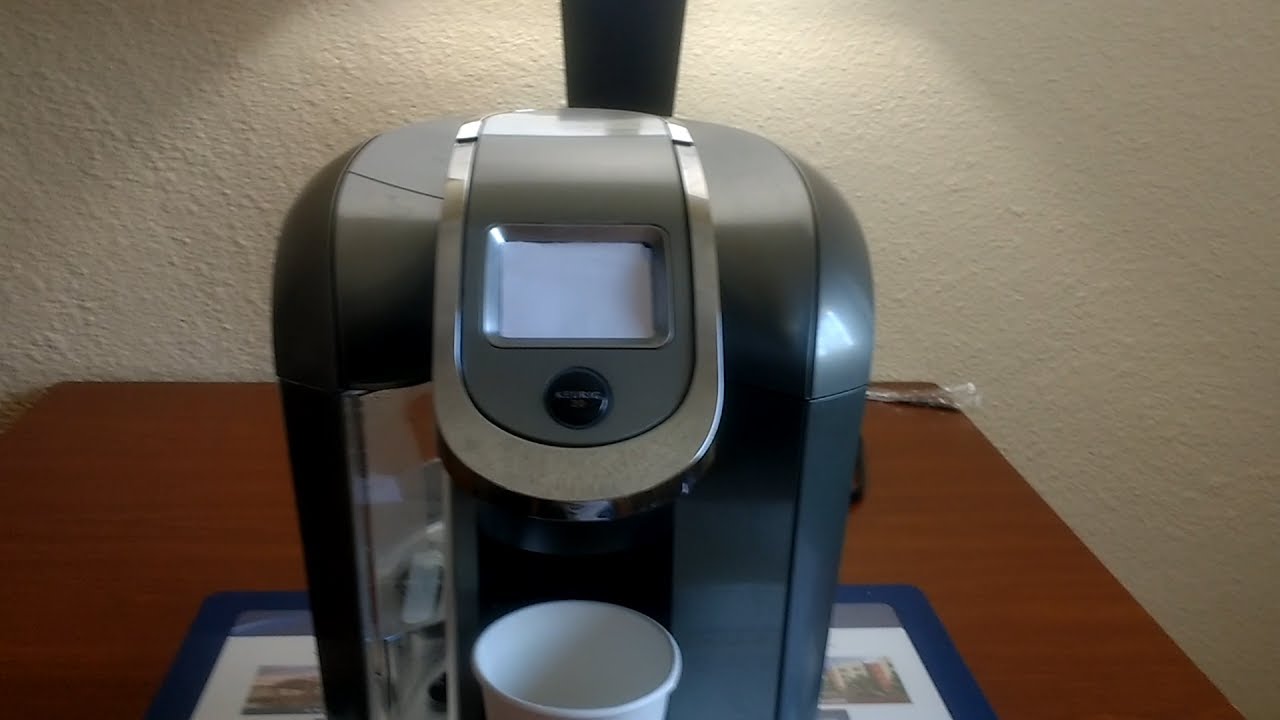
If most of the buttons such as the ‘Add Water,’ ‘Heat,’ and ‘Cup Size’ buttons are on or flashing, then there could be an issue with one of the parts of your Keurig machine.
The first part you should check is the water reservoir. You should remove it and check that it is clean before putting it back in place or it can stop brewing from occurring.
Next, you should check the water valve for any blockages which can stop the pumping water. Look carefully and remove them using warm water if there are any.
You will also need to ensure that the water tank is in place correctly on its holder. Fill it with water up to the max water line and make sure that it is connected correctly.
Next, you should press the Keurig brew button to run a brewing cycle with water alone. Remove any K-cup coffee capsules and run the brewing cycle.
Select 6oz or 8oz and measure the amount with a measuring cup. If it’s the correct amount and all lights return to normal, your Keurig will be fixed.
If it’s not the right amount of coffee, then remove the water filter and press the brew button again to repeat the brewing cycle.
If you now get the right amount of coffee, you’ll need to change your water filter.
13. Keurig Coffee Tastes Horrible!
Is your morning coffee leaving a bitter taste in your mouth? If your Keurig coffee maker is producing subpar brews, fear not!
A common issue can be the lingering taste of mineral buildup in the machine.
The solution? Give your Keurig a thorough cleaning. Start by removing and washing the removable parts, such as the K-cup holder and water reservoir, with warm soapy water.
Then, descale the machine by running a cycle with a vinegar and water solution. This will help remove any mineral deposits that may be affecting the taste of your coffee.
Once the descaling process is complete, run a few cycles with fresh water to rinse out any remaining residue.

14. The "Add More Water" Light Stay On
Is your Keurig stubbornly insisting on more water, even when you've already filled it up to the brim?
Don't let this frustrating glitch ruin your coffee routine! The culprit behind the perpetually illuminated "Add More Water" light is often a simple sensor issue.
To fix it, first, unplug your Keurig and remove the water reservoir. Check for any debris or blockage around the water level sensor, located at the base of the reservoir. Gently clean the sensor area with a soft cloth or brush.
Next, ensure that the water reservoir is properly aligned with the machine and securely in place.
Once you've completed these steps, plug your Keurig back in and give it a test run. Voila!
15. It Makes The Weirdest Noises
When your Keurig starts producing unexpected sounds during the brewing process, it often indicates a clog or blockage in the system.
To silence the coffee chaos, begin by powering off and unplugging your Keurig.
Carefully remove the water reservoir and detach the brewing chamber. Give both parts a thorough rinse to remove any coffee grounds or debris.
Next, inspect the needle that punctures the K-cup for any blockages, gently clearing it with a paperclip or needle if necessary.
Once everything is clean and tidy, reassemble the brewing chamber and water reservoir, making sure they are securely in place. Plug your Keurig back in and let it work its magic.

16. Keurig Not Heating
Don't let a lack of proper heating dampen your caffeine-loving spirits! When your Keurig fails to reach the desired temperature, the issue often lies with the heating element.
To fix this hiccup, start by unplugging your Keurig and allowing it to cool down completely. Next, remove the water reservoir and empty it.
Using a damp cloth, wipe away any mineral deposits or debris that may have accumulated on the heating element located at the bottom of the reservoir area.
Once clean, reattach the water reservoir and plug in your Keurig. Give it a test run by brewing a cup of hot water.
If the problem persists, it's time to contact Keurig's customer support.[2]
17. Keurig Splatters While Brewing
Say goodbye to unwanted coffee spray with a simple fix!
When your Keurig starts causing a caffeinated commotion, it's usually because of a clogged or misaligned needle. Begin by powering off and unplugging your Keurig.
Carefully remove the K-cup holder and give it a thorough cleaning, ensuring there are no obstructions or leftover coffee grounds.
Next, examine the needle puncture area for any debris and gently clear it with a paperclip or needle.
Once clean, reassemble the K-cup holder and plug your Keurig back in. Run a test brew to check for any remaining splattering issues.
18. Keurig Dispenses Way Too Much Water
When your Keurig becomes overly generous with its water dispensing, it's often due to a calibration issue.
To fix this, start by powering off and unplugging your Keurig. Remove the water reservoir and ensure it is filled to the appropriate level.
While the reservoir is out, give the machine's needle a gentle cleaning with a paperclip or needle to remove any potential blockages.
Once done, reattach the reservoir and plug in your Keurig. Now it's time for a recalibration.
Simply start a brew cycle without inserting a K-cup and let the machine dispense hot water into a measuring cup.
Measure the amount of water and compare it to the desired serving size. If it's still dispensing too much, repeat the process until it's calibrated correctly.

19. Can't Get The Lid To Close!
If your Keurig is having a hard time closing, it could be due to K-cup incompatibility.
Remove the K-cup and check to ensure the pods are compatible with your specific Keurig coffee maker.
If you're sure you have the right pods, the issue might be due to some debris or build-up around the lid.
Make sure you thoroughly clean your machine and all of the parts are correctly assembled before trying again.
20. My Brand New Keurig Has A Plastic Taste
When a new Keurig introduces a plastic taste, it's typically due to the machine's components and tubing.
Think about it... if the machine is brand new, the first brew or two might have a slight hint of the taste of the internal components.
But fear not, we have a solution to banish that unpleasant flavor. First, ensure your Keurig is clean and free from any leftover residue.
Run multiple cycles of water through the machine without inserting a K-cup, allowing it to flush out any potential plastic residue.
If the plastic taste persists, try using filtered or bottled water instead of tap water for brewing. Water quality can sometimes impact the taste.
Additionally, consider using BPA-free, reusable K-cups or filters to minimize any potential contact with plastic components.

Keurig Troubleshooting (Step-By-Step Guide For Popular Models)
Here's What You Need To Know
To fix Keurig coffee machines, you won't need to purchase any complex tools or supplies, but you should follow the health and safety precautions included in your Keurig instruction manual.
If you’re unsure about anything, it’s wise to do more research, but it’s okay to attempt fixing the coffee machines by yourself. In most cases, you’ll make progress.
One of the most common ways to solve any problems with your Keurig is through descaling.
To descale your Keurig, you’ll need to add a descaling solution or a mixture of vinegar and soap, perform a cleansing brew, leave the Keurig for 30 minutes and then wash it.
Knowing how to reset your Keurig machine is also useful when it won't brew. Older Keurig machines have to be turned off, drained, and left for a while.
But for newer models, it's complicated, and you might wonder, 'where is the reset button on my Keurig?' It involves pressing a sequence of buttons that varies by model.
If your Keurig won’t brew, check through the problems listed in the sections above and see if any of them apply to you. If not, you may need to contact customer care.
Step-By-Step Troubleshooting Guide
If your Keurig isn’t working and you’re unsure why, then this troubleshooting guide should help you find the solution.
- 1Change and soften the water. When you leave the water in the Keurig for a long time, minerals start to form and harden. Using bottled water instead of fresh water from the tap can help with this.
- 2Do a brewing cycle with bottled water or filtered water to rinse out anything stopping your machine from working correctly.
- 3Descale your Keurig machine often. This cleaning technique is excellent for cleaning and maintaining your Keurig machine.
- 4Air bubbles can often form in the water reservoir or water tank, and interfere with the brewing process. Unplug your coffee maker and gently shake the device until all bubbles are gone.
- 5Give it time to warm up. The Keurig machine often needs a minute or two to warm up and function correctly.
- 6Make sure there’s a K-cup capsule in the chamber. When you wake up in the morning craving a cup of coffee, you might make this simple mistake.
- 7Make sure your water reservoir is safely sealed and in the correct position. If it’s not, then your machine won’t brew any coffee.
- 8Another common mistake is not having your coffee maker turned on. After you plug it in, don’t forget to press the power button.
- 9Deep clean your Keurig often. The more you deep clean your Keurig, the longer it will stay working and keep brewing tasty coffee.

FAQs
Where is the reset button on my Keurig?
More recent Keurig models can be reset using the small and medium cup buttons. Older Keurig models don't have reset buttons, so they must be unplugged and plugged back in.
How many years should a Keurig last?
Your Keurig should last about 5 years or more. However, several factors will contribute to how long it lasts, including how frequently it's used, if it's cleaned often, and which model you own. If it keeps failing, then that's how you know it's due for replacing.
How long do Keurig cups last?
The Keurig cups (K-cups) last approximately eight months to one year. The K-cups are tightly sealed to prevent oxygen, light, and moisture from entering the K-cup capsule, so they preserve the coffee inside for a long time.
How do you fix a Keurig frother that is not working?
To fix a Keurig frother, make sure that the magnetic whisk is installed correctly in the machine. You also need to clean the frother after each use to prevent excessive build-up.
Should you leave water in your Keurig?
You can leave water in your Keurig for 2-3 days. However, you should reheat the water before using it to avoid bacteria forming in the water. If you leave water to sit longer than 2-3 days, it could go stagnant.
Get Your Keurig Working Again!
If you're a coffee lover then you'll find that your Keurig machine is reliable most of the time, but you might encounter some of the problems mentioned in this article.
If you do, you can find a quick fix using the troubleshooting solutions that we’ve provided in this guide.
This means you’ll be able to get back to your everyday coffee routine quickly and easily.
References:
1. https://www.emerald.com/insight/content/doi/10.1108/case.kellogg.2016.000173/full/html
2. https://support.keurig.com/