If you make a purchase using our provided links, we may receive a commission. Learn more here.
When I first looked into Dutch Bros franchising, I expected a standard buy-in model. That is not how the company operates in 2025.
Dutch Bros has been my favorite place to grab coffee for well over a decade now.
That curiosity is what pushed me to see whether opening one was ever realistic.
I wanted to sort out how the old franchise setup worked and what the business looks like now.
Key takeaways
Is Dutch Bros coffee a franchise you can own?
Dutch Bros no longer affers a franchise program for potential owners.
According to the Dutch Bros website, all Dutch Bros are now company-owned locations, and franchisees can no longer open a Dutch Bros location.
That is disappointing if you were hoping to buy in, but the company-owned model also helps explain why the brand feels so tightly controlled.
Keeping stores company-owned seems to help Dutch Bros stay tight on service and drink consistency. On busy days, that sameness is noticeable even when the line keeps moving.
The promote-from-within model also leaves another path open. If someone likes the pace and sticks with it, there are still ways to move up inside the company.
While owning a Dutch Bros franchise is no longer an option, there are still plenty of ways to get involved with this beloved coffee chain.

DBs franchising history explained
Dutch Bros, named after the founder's immigrant grandparents, is a privately held coffee chain with a long history behind it.
It started in 1992 when Dane and Travis Boersma bought an espresso machine in Grants Pass, Oregon, and began serving complimentary drinks to friends.
In the early years, the company used a franchise model, and the Boersma brothers partnered with friends and family to open drive-through locations across the Pacific Northwest.
In 2008, Dutch Bros shifted to an internal growth model, which meant people interested in opening a location had to be existing employees with at least three years of experience.
By 2017, the company made the decision to stop offering franchises altogether.
From the customer side, that kind of control is part of why the brand feels so consistent store to store. When I order the same drink from different locations, that consistency is one of the first things I notice.
Since then, Dutch Bros has expanded quickly across the western United States.
How much does a Dutch Bros franchise make?
A Dutch Bros franchise could make anywhere from around $570,000 to $650,000 in total revenue, depending on the location.
The average profit for a Dutch Bros store owner at an estimated $124,000 annually.
Labor costs, product waste, employee theft, and longer wait times can all affect those numbers, too.
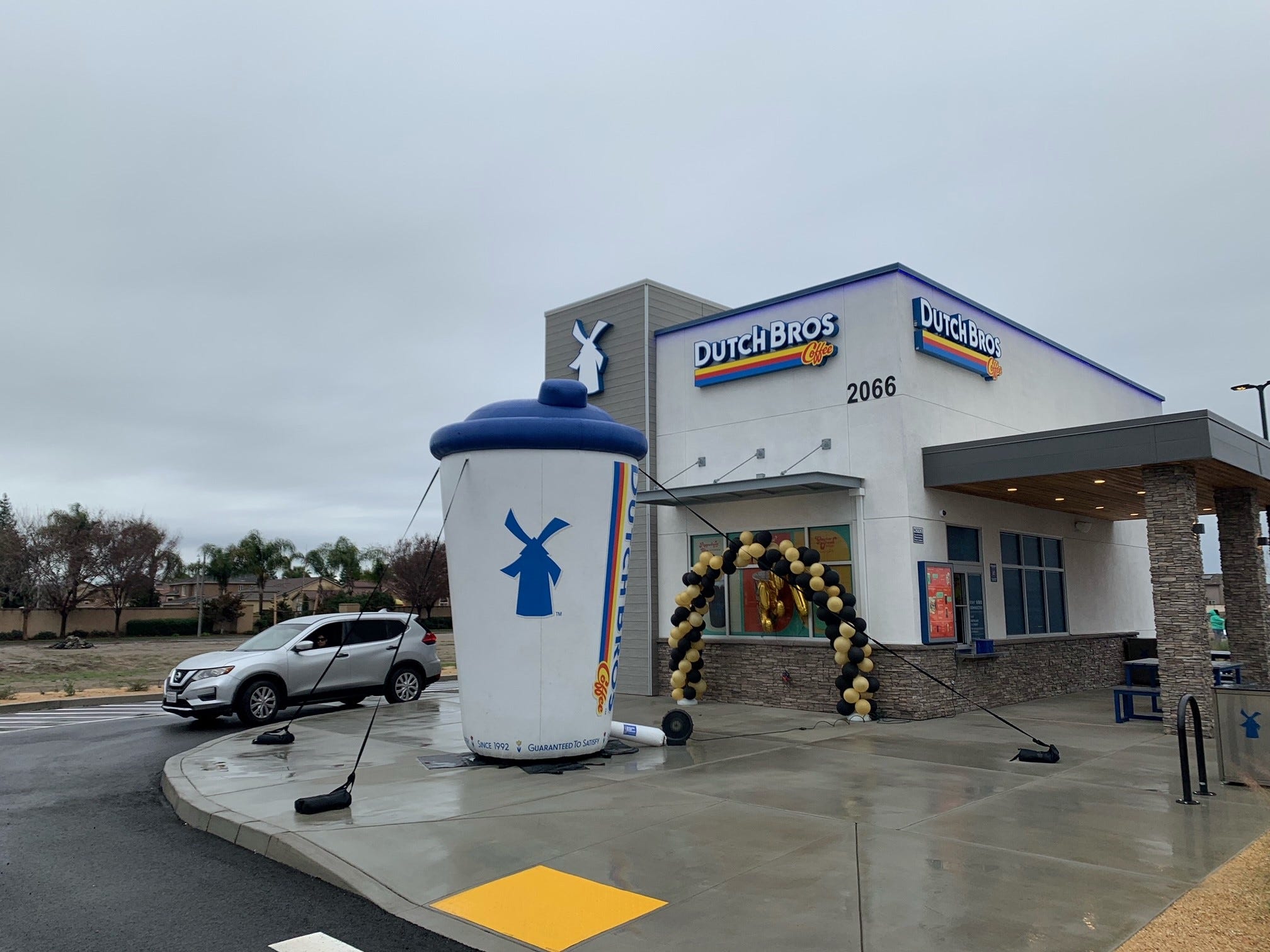
Previous financial requirements & fees of Dutch Bros franchisees
Dutch Bros no longer offers franchise opportunities, so the cost breakdown is mostly useful as a look at how the model used to work.
Initial fees are only part of the picture. Payroll, technology, and training costs can add up later.
That is the kind of thing I would want to verify carefully, especially against firsthand feedback from people who actually ran the stores.
Here are some past requirements of Dutch Bros franchises:
Fees or Expenses | Amount |
|---|---|
Liquid capital (liquid cash requirement) | $150,000 |
Net Worth | $500,000 |
Total Initial Investment Range | $150,000-$500,000 |
Franchise Fee | $30,000 |
Using the median sales estimates cited for Dutch Bros, a 20% profit margin would put payback at roughly 2.75 years. On paper, that looks appealing, though it still depends heavily on the assumptions behind it.
Dutch Bros also charged an ongoing royalty fee of 5% of gross sales or $1,300 per month.
That fee was separate from the initial franchise fee and went to corporate as part of staying in good standing as a Dutch Bros operator.
Dutch Bros average sales, revenue & profit analysis
Even though franchising is gone, the financial performance still helps explain why people kept looking at Dutch Bros as a possible buy-in.
In 2020, despite the challenges posed by the pandemic, the company reported a 7.7% growth in net sales, thanks in part to its drive-thru model.
At one point, the company's 328 locations were estimated to generate $494 million in system-wide sales, with average revenue per store around $1.5 million in gross sales per unit.
In 2020 alone, Dutch Bros opened 53 new outlets, contributing to its continued success.
The company's pandemic performance is also often cited as a sign the model could handle disruption.
That kind of performance is part of what made the brand interesting to investors. A few of the numbers are below:

Dutch Bros SWOT analysis (What you need to know)
Strengths
Dutch Bros Coffee has a few strengths that help it stand out.
Weaknesses
It also has weaknesses that can limit how far it can stretch that advantage.
Opportunities
Dutch Bros can also benefit from outside factors such as economic growth, policy changes, new technology, shifting consumer tastes, and political developments.
Those shifts can create room for the company to strengthen its position or keep expanding. Some of the main opportunities are:
Threats
Threats are the outside pressures that can make the Dutch Bros model harder to sustain.

Are Dutch Bros shops involved in the community?
A lot of entrepreneurs also want the business to matter locally, not just financially.
That was part of what made me look into opening one in the first place.
As a customer, I usually notice the community side when the brand runs a promo or donation day.
Dutch Bros has also supported causes related to Lou Gehrig's disease.
The company has said that after co-founder Dane Boersma died from the condition, its drive-through locations donate one day's profits from drinks to the Muscular Dystrophy Association each year.
That is one example of the brand's community giving. Another is “Buck for Kids Day.”
On that day, proceeds from Dutch Bros sales go to local non-profit organizations that support youth in the community.
That kind of giving puts money back into programs that serve children and families.
FAQs
How much is the Dutch Bros franchise owner’s salary?
A Dutch Bros franchise owner salary could have ranged from $50,000 to $250,000 annually. Even at the high end, that is a wide spread, and the average income was not especially high for an owner.
How rich is the owner of Dutch Bros?
Travis Boersma's estimated net worth has been put at $2.1 billion. That is a big jump from the coffee cart origins in downtown Grants Pass, Oregon.
What makes Dutch Bros successful?
Dutch Bros stands out to me because of its private bean blend, broad customization, affordable prices, and the kind of service that keeps regulars coming back.
Are there any alternative franchises?
If you were looking for a different drive-thru coffee franchise, The Human Bean is one comparison point. It uses a similar model.
Are coffee franchises profitable?
Profitability usually comes down to location, competition, cost structure, pricing, marketing, and management. From the outside, what stands out is how much the branding, clear menu, and efficient drive-thru setup seem to do for the business.
Who is Dutch Bros’ target audience?
Dutch Bros tends to appeal to a younger crowd, and the menu makes sense to me there because it leans sweet, customizable, and fast-moving.
Who is Dutch Bros biggest competitor?
Some of Dutch Bros' biggest competitors are Starbucks, Scooter's Coffee, Dunkin Donuts, Caffe Bene, Peet's Coffee, and Caribou Coffee, though plenty of other coffee chains fit the bill too.
Summary
It is not currently possible to start a Dutch Bros coffee shop, but that does not mean the door will stay closed forever.
Given how much the company has grown, I can understand why people still wonder whether franchising could come back someday.
For now, I still get my Dutch Bros fix as a customer. It is usually the same kind of stop I make when I want something sweet, fast, and familiar.