If you make a purchase using our provided links, we may receive a commission. Learn more here.
I used to treat brewing temperature as a minor detail until cups kept swinging from sour to flat or bitter even when everything else looked unchanged. Near-boiling filtered water is a good starting point, but temperature is only one variable.
That is usually when I stop assuming the beans are the problem and start checking heat, grind, and brew time again.
I break it down by how I brew: automatic drip first, then manual methods, then the simple ways I keep water close to target without getting fussy.
I also look at the science behind why temperature changes extraction, because the cup makes more sense once you connect the number to taste.
Ideal water temperature for different types of brewing
Drip coffee makers are among the most common home brewing setups, so that is the baseline I compare everything else against.
Those machines handle water temperature for you, which helps with consistency, but they do not rescue a weak grind or a ratio that is way off.
Manual brewing leaves much more of the process in your hands. I usually split it into percolation, where water passes through the coffee, and full immersion, where the coffee steeps.
For almost every brewing method, near-boiling water (below 212 F) is the right temperature.
For both, I treat 195 to 205 F as a reference point, not a rigid rule.
Without using a thermometer, you can usually get a near-perfect coffee brewing temperature by bringing water to a boil and letting it cool for 30-40 seconds.
Note that the temperature of the water acting on the coffee will always be cooler than it was in the kettle.
I get closer to that target by preheating the brewer or press with hot water first, because the first water I pour often loses heat to the equipment.
I have tried starting with colder water, but I treat the oxygen point as a minor lever next to grind and brew time.
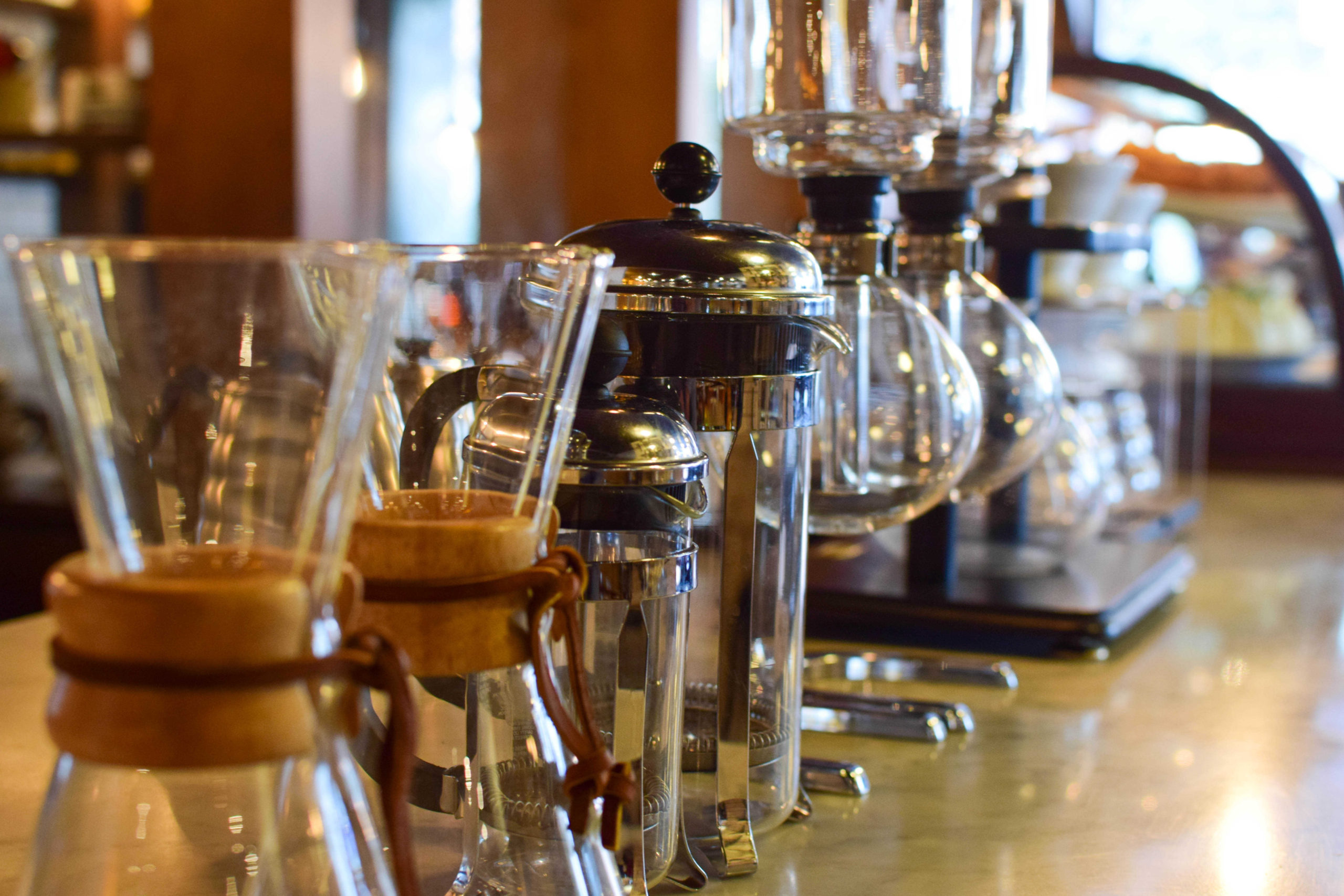
Pour-over coffee
With immersion brewing, small temperature or timing mistakes show up fast because the coffee stays in contact with the water the whole time.
Chemex
These improved Chemex drip brewers are made of thicker glass to hold heat longer, thus maintaining a higher temperature throughout the brewing process. These Chemex brewers come in different sizes.
The filter matters too. In a brewer like this, I pay attention to filter quality because it affects flow and how evenly the coffee draws down.
French press coffee
It is one of the easiest methods to recognize, and it is the kind of cup most coffee drinkers already have an opinion about.
Different French presses come in various sizes and materials with different degrees of heat insulation.
AeroPress coffee
It was designed for travel, but I still think of it as a method that rewards attention to heat and brew time.
Interestingly, the perfect coffee brewing temperature for the AeroPress is only 175 F.
Drip coffee/automatic
Generally, you do not control the water temperature; all certified coffee makers reach the recommended range.
Some brewers offer stronger or weaker settings, and a few let you choose a target temperature for different roasts.
When a machine does that, I still want to know whether it is only changing water temperature or also changing flow and contact time.
Espresso
Espresso is vapor pressure-based; you do not really measure temperature.
I treat manual devices like moka pots the same way: they work best when the heat stays steady enough to keep the brew moving.
Siphon/vacuum coffee
The mechanism can look awkward at first, but once I have watched one or two run properly, the process stops feeling mysterious.
The ideal water temperature is comparable to that of other drip-brewed coffee methods.
Cold brew coffee
Cold brew is made by steeping coffee in room-temperature or cold water for many hours, usually about a day, and that long contact time gives it a very different feel from hot brewing.
Precise temperature is not important.
Water temperatures for different coffee roasts
What is the effect of water temperature on your coffee?
A 2020 Scientific Reports article summarized a Specialty Coffee Association-supported study on how temperature, brew strength, and extraction interact in the cup.
The experiment was informed by the SCA Golden Cup Standard and coffee brewing control chart, both of which serve as a technical guide for coffee professionals.
Several factors contribute to brew strength and extraction–grind size, brew ratio, brew temperature, and possibly brew time.
The study's takeaway, for drip brewing with target strength and extraction held steady, was that temperature had a relatively small effect on flavor within the range tested:
They tested 87 C, 90 C, and 93 C, or 188.6 F, 194 F, and 199 F.
The study looked beyond the four basic tastes and also tracked aromas, flavors, and mouthfeel.
Note that taste is specific to the taste buds, and aroma is specific to the nose. Mouthfeel is purely texture-based.
In contrast, flavor is the combined sensation of taste, smell, and, to some degree, texture.
That matters because some notes, like dark chocolate, are easy to picture, while others, like ashy, make more sense when you compare them side by side.
In the cup, under-extraction usually reads as sour, while over-extraction can push things toward bitterness and a burnt edge.
The researchers note that strength is subjective. I notice that most when a cup tastes intense but not especially full.
With hot brewing, flavor depends on which compounds move out first, which is why the same beans can taste different at different temperatures.
Cold brew shows the same general principle more slowly: lower temperatures slow extraction, while the final flavor also depends on contact time, grind size, water chemistry, and recipe.
You can make good coffee in cooler water, but it usually takes longer and tastes different.
Lastly, note that consumption temperature affects perceived flavor. This further depends on whether it is served as black coffee or as a preparation with additives.

Best ways to control coffee temperature
If I want consistency without thinking about the kettle, an automatic coffee maker is still the easiest option.
When I brew manually, I usually boil the water and let it sit for about 30 seconds before pouring.
For added precision, try using a thermometer–a regular kitchen thermometer or, if you would rather, an infrared/laser thermometer.
First I decide what I want to measure: the final cup, the kettle water, or the water as it hits the grounds.
For that last one, the thermometer has to go directly into the coffee bed during extraction.
A built-in thermometer on an electric gooseneck kettle is one of the cleanest ways to track heat.
The gooseneck shape also helps keep the pour steady, which makes temperature and flow more consistent at the grounds.

FAQs
What happens if you brew at the wrong temperature?
If the temperature is off, the cup usually tells me first. I match it against roast level, grind size, brew time, and brew method instead of treating it as a standalone number.
Does hotter water make better coffee?
Hotter water usually speeds extraction. Water near the boiling point can reduce the risk of a weak, under-extracted cup, but pouring straight from the kettle may increase extraction too much for some recipes and push the brew toward bitterness or astringency.
Does hotter water make stronger coffee?
Brew ratio also changes strength, so temperature is only part of the equation.
Will boiling water burn your coffee?
If the water is too hot, the cup can become bitter or astringent from excessive extraction.
What temperature will coffee burn the tongue?
Most people cannot comfortably consume coffee it until it cools to a lower temperature of about 145 F. In addition, chronic consumption of hot beverages can contribute to mouth and esophageal cancer.
What temperature does Mr. Coffee brew at?
Even when brew settings vary, I keep the 195 to 205 F range in mind as a baseline.
Conclusion
The best brewing temperature is not always the hottest one.
The right tools make it easier to keep brewing temperature steady from start to finish.
Once you understand how temperature interacts with brew method, grind, and roast level, it gets easier to trust what the cup is telling you.